
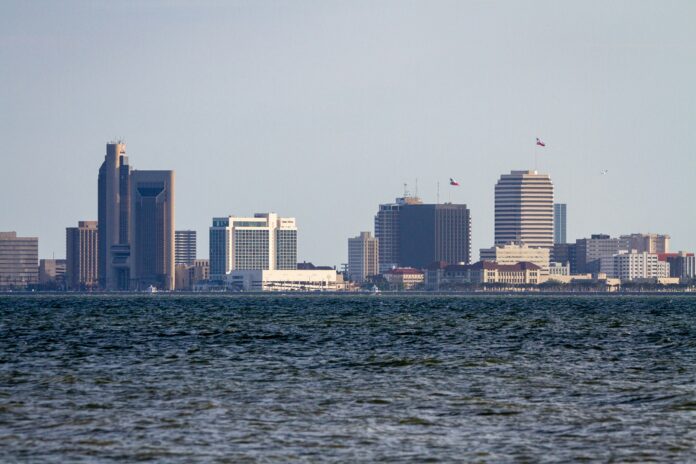
CORPUS CHRISTI, Texas — In a stunning breakthrough for modern physics, scientists have successfully detected faint ripples in spacetime caused by two black holes colliding over a billion light-years away.
Meanwhile, officials in Corpus Christi say they are hard at work “continuing to analyze the situation” regarding whether the city might run out of water sometime between now and “whenever the reservoirs start looking concerning.”
The groundbreaking discovery in spacetime required instruments so sensitive they can measure distortions smaller than a proton across four-kilometer laser tunnels. Using this technology, researchers can observe events so violent they warp the fabric of the universe itself.
Local officials confirmed this week they are still working on detecting when the city’s reservoirs might warp into the fabric of “critically low enough to maybe do something.”
“We now know that when black holes collide, they send gravitational waves across the cosmos,” said one astrophysicist. “We can measure them after traveling billions of years through space.”
He then checked a news alert about regional water levels.
“But tracking municipal water planning? That’s a much more chaotic system.”
South Texas residents say they are proud of humanity’s scientific progress but remain impressed by the contrast.
“It’s incredible,” said one local resident. “We can measure spacetime bending across the universe, but figuring out how much water will be in the reservoir next summer is still a mystery that requires interpretive dance and three city council meetings.”
City leaders emphasized that the situation is under control and pointed to several innovative strategies, including voluntary conservation, sternly worded public service announcements and “thinking really hard about clouds.”
One official explained the complexity of the issue.
“Black holes obey the laws of physics,” the spokesperson said. “Municipal infrastructure funding obeys the laws of politics. Completely different field.”
Scientists confirmed that future research will attempt an even more difficult measurement: determining exactly how much water Corpus Christi will have in August without using the phrase “if conditions worsen.”

