
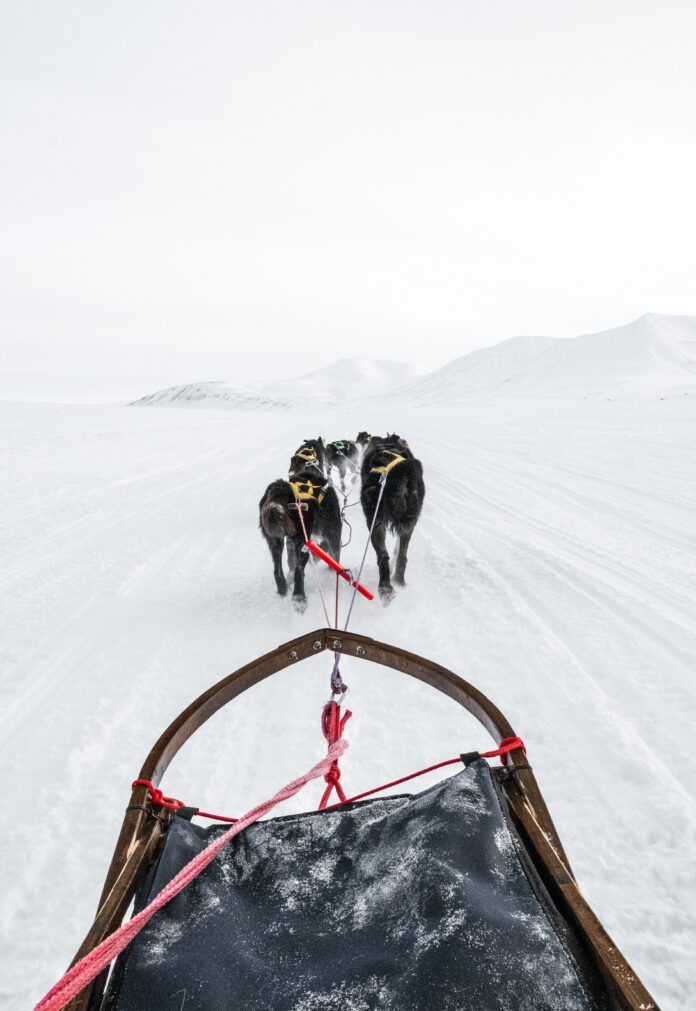
NOME, Alaska — Officials with the Iditarod Trail Sled Dog Race confirmed Thursday that the event remains the only organized sport where the official field of play includes not just the course, but “any animal, weather system or geological feature that wakes up that morning and chooses violence.”
The nearly 1,000-mile race across Alaska has long been famous for hazards like minus-40 windchill, whiteout blizzards, collapsing river ice, sleep deprivation and the occasional wildlife encounter. But this year’s race has also featured a new reminder that the Arctic wilderness operates under the same rules as a poorly moderated comment section: anything large enough will absolutely start something.
During the early portion of the race, several mushers reported encountering bison along the trail, some of which had positioned themselves directly next to the route like heavily armored referees waiting to see if anyone wanted to argue a call.
“Yeah, they were just standing there,” one musher reportedly said. “Just watching us. Like they’d been assigned to guard the level boss.”
According to race officials, this is completely normal.
“People think the Iditarod is a race against other mushers,” said a spokesperson. “But it’s really more of a race against Alaska, and Alaska has an extremely flexible interpretation of sportsmanship.”
Unlike football, where the field is measured in yards, the Iditarod’s field is measured in “however far you can travel before something enormous decides you’re interesting.”
Past hazards have included avalanches, gale-force winds, thin ice, hallucinations caused by sleep deprivation, and moose with the emotional regulation of a forklift. In one recent race, a musher was forced to shoot and gut an aggressive moose after it became entangled with his dog team — an incident officials classified as “routine wilderness paperwork.”
But veterans say the bison sightings this year add a new layer of unpredictability.
“In baseball, if a 2,000-pound animal wanders onto the field, the game stops,” said longtime musher Carl Nystrom. “In the Iditarod, that’s just called ‘a dynamic trail feature.’ ”
Spectators following the race online say they enjoy the event because it’s the only sport where the phrase “course conditions” might include “a prehistoric tank with hooves currently evaluating your life choices.”
“I checked the race tracker and saw one team slowed down near the Farewell Burn,” said fan Melissa Granger. “Turns out it was because several bison were standing on the trail like they were running security.”
Race organizers insist that despite appearances, the event is extremely well organized.
“There are checkpoints with hot food, medical staff and places to rest,” a race official explained. “They’re spaced every 50 to 100 miles so competitors can recover from whatever just tried to end their bloodline.”
Veteran mushers say surviving the trail requires preparation, experience and the ability to calmly assess situations like “16 dogs sprinting toward a snowstorm while a bison or moose the size of a Honda Civic watches from 10 feet away.”
“You just stay relaxed,” Nystrom said. “Don’t make eye contact. Don’t panic. And definitely … don’t ask yourself why you signed up for this.”
At press time, race organizers were reminding competitors that while the official route to Nome is carefully mapped, the list of potential obstacles remains open-ended and currently includes weather, wildlife, terrain and “whatever new nightmare Alaska decides to spawn before sunrise.”

